
Employability & Skills PathwaysInclusion & Neurodiversity
Coming Soon! Career Conversations!
For everyone, everywhere!
5 August 2026
Inclusion starts with understanding.
Because people cannot fulfil their potential if the barriers in their way are never recognised.
Creating an inclusive workplace, classroom or organisation is about more than having the right policies in place.
It is about understanding that people experience environments differently.
The way someone communicates, processes information, responds to change, manages competing demands or demonstrates their ability may not look the same as somebody else.
When those differences are misunderstood, people can easily be overlooked, labelled incorrectly or expected to succeed within systems that were never designed with them in mind.
At Careers Ideas, we help employers, education providers and teams build greater understanding of neurodiversity, SEND and inclusive practice, and turn that understanding into practical action.
Behaviour tells us something. But it doesn’t always tell us the whole story.
Someone who appears disengaged may be overwhelmed.
Someone who struggles in an interview may be highly capable in the role.
An employee who finds a particular working environment difficult may thrive when small adjustments are made.
A young person struggling to progress may have needs that have never been fully identified or understood.
Deborah’s work encourages organisations to pause before making assumptions and become more curious about what may be happening beneath the surface.
Greater understanding helps us ask better questions.
And better questions can lead to better support, better opportunities and better outcomes.
Different ways of thinking can be a strength when the environment allows people to use them.
Neurodiverse teams can bring different perspectives, approaches, ideas and ways of solving problems.
But simply recruiting a diverse workforce does not automatically create an inclusive one.
People also need to feel understood and supported once they are there.
Managers may need greater confidence around communication and workplace adjustments. Recruitment processes may unintentionally create barriers. Employees may spend significant energy trying to fit expectations rather than being able to focus on the work they do well.
Creating a more neuroinclusive workplace means looking at the whole employee experience, from recruitment and onboarding through to communication, management, progression and retention.
It also means recognising that there is no single approach that will work for every individual.
The goal is not to treat everybody identically.
It is to create an environment where people have a fair opportunity to contribute, develop and succeed.
Understanding neurodiversity is only the beginning.
Awareness matters.
But meaningful inclusion happens when that awareness starts to influence everyday behaviour and organisational decisions.
Deborah helps organisations explore these questions without judgement, building confidence and identifying realistic changes that can make a meaningful difference.
Recognising needs earlier can change what happens next.
Deborah’s work also explores the connection between education, SEND, employability and longer-term career outcomes.
When needs are missed or misunderstood during education, the impact can extend far beyond the classroom.
It can influence confidence, progression, career choices and how prepared someone feels to navigate the workplace.
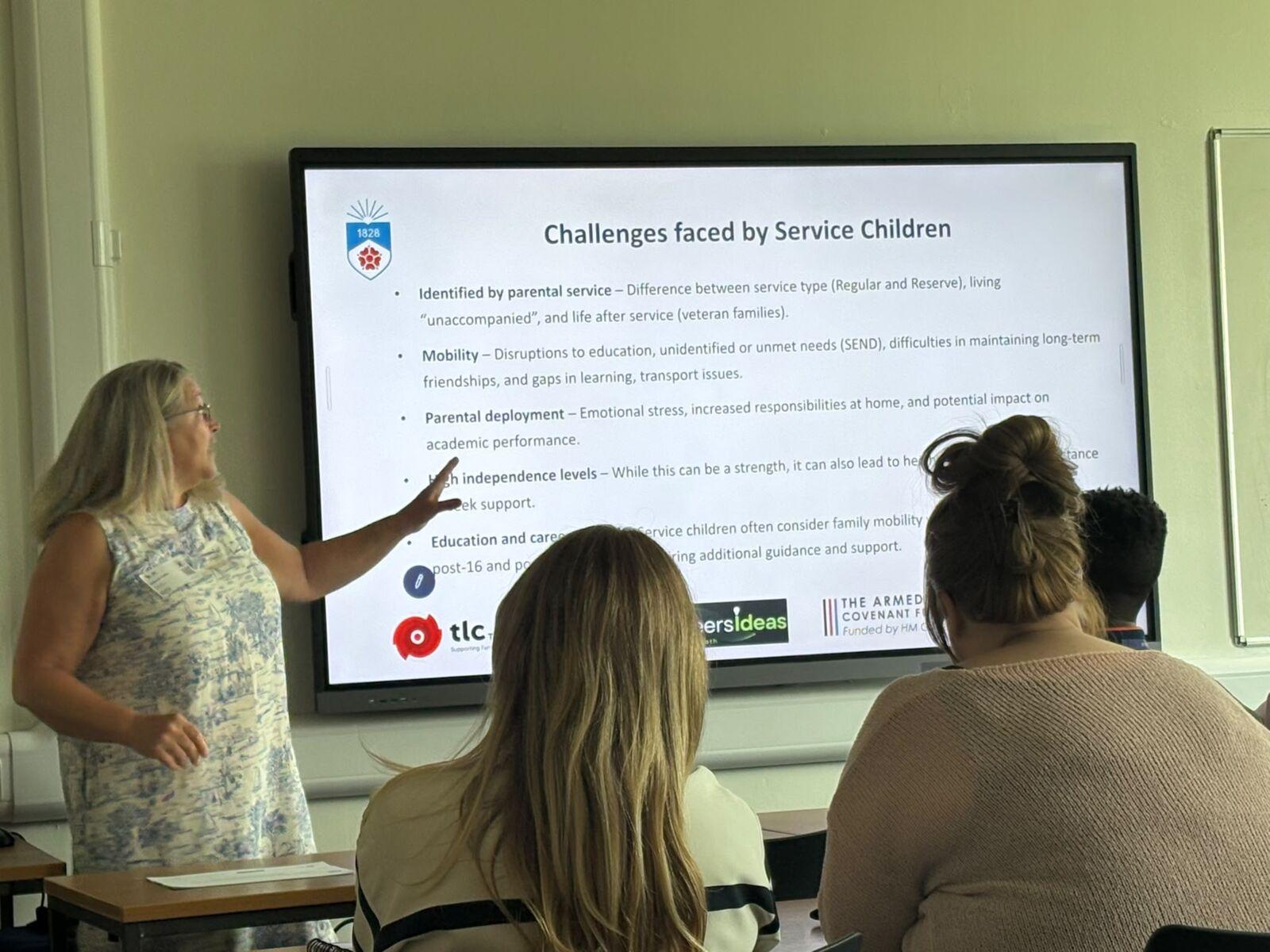
This is particularly important within Deborah’s work with military-connected young people, where frequent moves, changes in education and wider family circumstances can sometimes make additional needs harder to recognise.
Her approach brings together education, employability and inclusion to ask a wider question:
What could change if we understood the individual earlier?
Practical support for creating more inclusive environments
Every organisation will be at a different point in its inclusion journey.
Deborah works with employers, education providers and teams to build understanding, explore barriers and identify practical ways forward.
Support can include:
Engaging sessions that help teams develop their understanding of neurodiversity, inclusive practice and the different experiences people may bring into education and the workplace. Sessions can be tailored to your organisation, audience and existing level of knowledge.
Support to explore a particular inclusion, workforce or education challenge in greater depth, bringing together research, organisational insight and different perspectives to identify practical recommendations.
Thought-provoking talks for teams, conferences, professional networks and events that encourage people to challenge assumptions and think differently about inclusion, potential and opportunity.
Inclusion & Neurodiversity support can be particularly valuable for:
Support can be adapted around your people, environment and priorities.
Small changes can remove significant barriers.
People experience inclusion through everyday moments.
Whether they feel comfortable asking a question.
How clearly information is communicated.
Whether somebody takes time to understand why they are struggling.
How a manager responds when an employee asks for support.
Whether recruitment allows people to demonstrate what they can actually do.
And whether difference is viewed as a problem to solve or something to understand.
Creating more inclusive organisations does not always require an enormous initiative.
Sometimes it starts with greater curiosity, better conversations and a willingness to do things differently.
Inclusion and neurodiversity do not sit separately from the wider organisation.
They connect directly with leadership, workplace culture, recruitment, skills development, career progression and retention.
That is why Careers Ideas takes a joined-up approach.
Deborah brings together professional experience, research and practical insight to help organisations see where barriers may exist and understand what can realistically change.
Because when people are better understood, they are better able to show what they can do.
Start with what you want to understand or change.
Perhaps you want your managers to feel more confident supporting a neurodiverse workforce.
You may be reviewing your recruitment or workplace practices.
You might want to strengthen SEND awareness within an education setting.
Or you may know that people are experiencing barriers without yet understanding exactly where those barriers sit.
You do not need to have the answer before getting in touch.
Start with the challenge and we can explore the right way forward.
Explore more ideas, research and practical perspectives from Deborah.
For everyone, everywhere!
5 August 2026
Support Needs of Service Children!
4 August 2026
Seeing the unseen: Supporting Military connected Students at B&FC
8 July 2026