Inspiring the Next Generation: Delivering a Careers Session to Cadets!
Career Insights with local Cadets!


.jpeg)
The skills and employment landscape is changing rapidly. Technology is transforming the way we work. Artificial intelligence is changing job roles and recruitment. Employers are looking for new combinations of technical, digital and human skills, while individuals are navigating increasingly complex career pathways.
At the same time, many organisations continue to experience skills shortages, young people are trying to understand what the workplace of the future looks like, and people returning to employment or changing careers can face significant barriers. There is no single organisation that can solve these challenges alone.
Collaboration has to be at the heart of the future skills agenda. At Careers Ideas Ltd, we believe that meaningful change happens when education, employers, local authorities, communities and individuals work together to understand the challenges and develop practical solutions.
For too long, conversations about skills and employment can take place in separate spaces. Schools and colleges focus on preparing learners. Employers focus on recruitment and workforce development. Universities focus on research and knowledge. Government and local authorities focus on economic and employment priorities. Training providers deliver programmes. Individuals try to navigate the system and make decisions about their futures.
But the challenges facing our workforce do not sit neatly within these boundaries. A young person may need better careers information, an employer connection and work experience. A military spouse may have significant transferable skills but need support translating those skills into civilian employment. A service leaver may possess leadership, project management and problem solving experience but need help communicating that experience to a civilian employer. A SME may want to recruit but struggle to understand how to attract and retain the right talent. A university may have valuable research and knowledge that could help employers, but needs the right partners to translate that knowledge into practical outcomes.
Skills are more than qualifications
One of the biggest challenges we face is recognising that employability is about much more than qualifications. Qualifications remain important, but employers also need people who can communicate, collaborate, adapt, solve problems, understand technology, demonstrate emotional intelligence and continue learning. The workplace is changing so quickly that the ability to learn, unlearn and relearn is becoming increasingly important.
This is particularly relevant as artificial intelligence and emerging technologies become part of everyday working life. The question should not simply be:
"What skills do people have today?"
We should also be asking:
"What skills will people need tomorrow – and how do we create opportunities for them to develop those skills?"
Technology should not be viewed simply as something that will replace jobs. It is also a tool that can create opportunities, improve productivity, support learning and help people access employment. Artificial intelligence, automation, digital platforms, data and emerging technologies are already changing the way organisations operate. That means our approach to employability must evolve too.
People need opportunities to understand how technology is changing their sector and how they can use it safely and effectively. This includes helping individuals understand how to use AI when preparing CVs and applications, while retaining their own voice and ensuring that information is accurate and authentic. It also means helping employers consider how technology can support recruitment, workforce development and organisational effectiveness without losing the human element.
Technology should enhance human capability – not replace the importance of human connection.
Innovation is not always about inventing something completely new. Sometimes innovation means looking at an existing problem differently. It might mean bringing an employer into a classroom. It might mean connecting an academic researcher with a SME. It might mean using lived experience to redesign a training programme. It might mean helping someone recognise that the skills they developed in one career have significant value in another. Or it might mean asking a question that has not previously been asked.
At Careers Ideas Ltd, we are particularly interested in the space between education, employers, research and people. Our work with academic institutions, schools, colleges, employers and individuals demonstrates the value of bringing different perspectives together. Research can help us understand a problem. Employers can tell us what they need. Education providers can help develop capability, and individuals can tell us what support actually works for them. When those perspectives come together, we have a much greater opportunity to create meaningful change.
Our Skills and Employability programmes are designed around this principle. Rather than delivering a one-size-fits-all approach, we work with organisations to understand their particular challenges and develop practical, relevant programmes. Our common thread is simple: we connect people, skills, education and opportunity.
Employers have a vital role to play in the future skills system. If we want people to be work ready, we need employers to be part of the conversation about what "work-ready" actually means. That means creating stronger links between education and industry. It means giving young people opportunities to meet employers and understand different careers. It means creating meaningful work experience. It means supporting people who may have non-traditional career histories and it means recognising transferable skills.
An individual's career journey is rarely linear anymore. People change sectors. They retrain. They take career breaks. They relocate. They leave the Armed Forces. They become carers. They return to work. They become self-employed. Our recruitment and development practices need to reflect the reality of modern careers.
Some of the most valuable outcomes come from unexpected collaborations. An academic institution may have research expertise. An employer may have a real world problem. A training provider may have the ability to develop a programme. A local authority may understand the regional skills landscape. A community organisation may have trusted relationships with people who are furthest from opportunity and an individual may have lived experience that changes how we understand the problem.
Bringing those perspectives together can create solutions that none of the organisations could have developed independently. That is why collaboration is not simply a nice addition to skills and employability programmes. It is fundamental to them.
The future workforce will need more than technical knowledge. It will require curiosity. Adaptability. Digital confidence. Critical thinking. Communication. Collaboration. Creativity. Leadership.
And perhaps most importantly, the confidence to keep learning. We cannot predict every job that will exist in ten or twenty years, but we can prepare people to navigate change. We can give them the skills to adapt. We can create stronger connections between education and employment. We can help employers think differently about recruitment and workforce development and we can embrace technology while retaining the human relationships that make organisations successful.
Tackling the skills and employment challenge is not the responsibility of one organisation, one sector or one government department. It is a shared responsibility. Education has a role. Employers have a role. Government has a role. Training providers have a role. Researchers have a role and individuals themselves must have access to the information, support and opportunities they need to make informed decisions about their futures.
At Careers Ideas Ltd, we believe that our role is to help connect those conversations. To bring people together. To challenge conventional thinking. To develop practical skills. To support organisations and to create pathways between education, employment and opportunity. Because the future of skills is not simply about preparing people for the jobs that exist today. It is about creating the capability, confidence and curiosity to thrive in the jobs of tomorrow.
If your organisation is exploring how to develop its workforce, improve employability, support career transitions or create stronger links between education and employment, Careers Ideas Ltd would welcome the opportunity to collaborate.
Different perspectives. Shared purpose. Better outcomes.
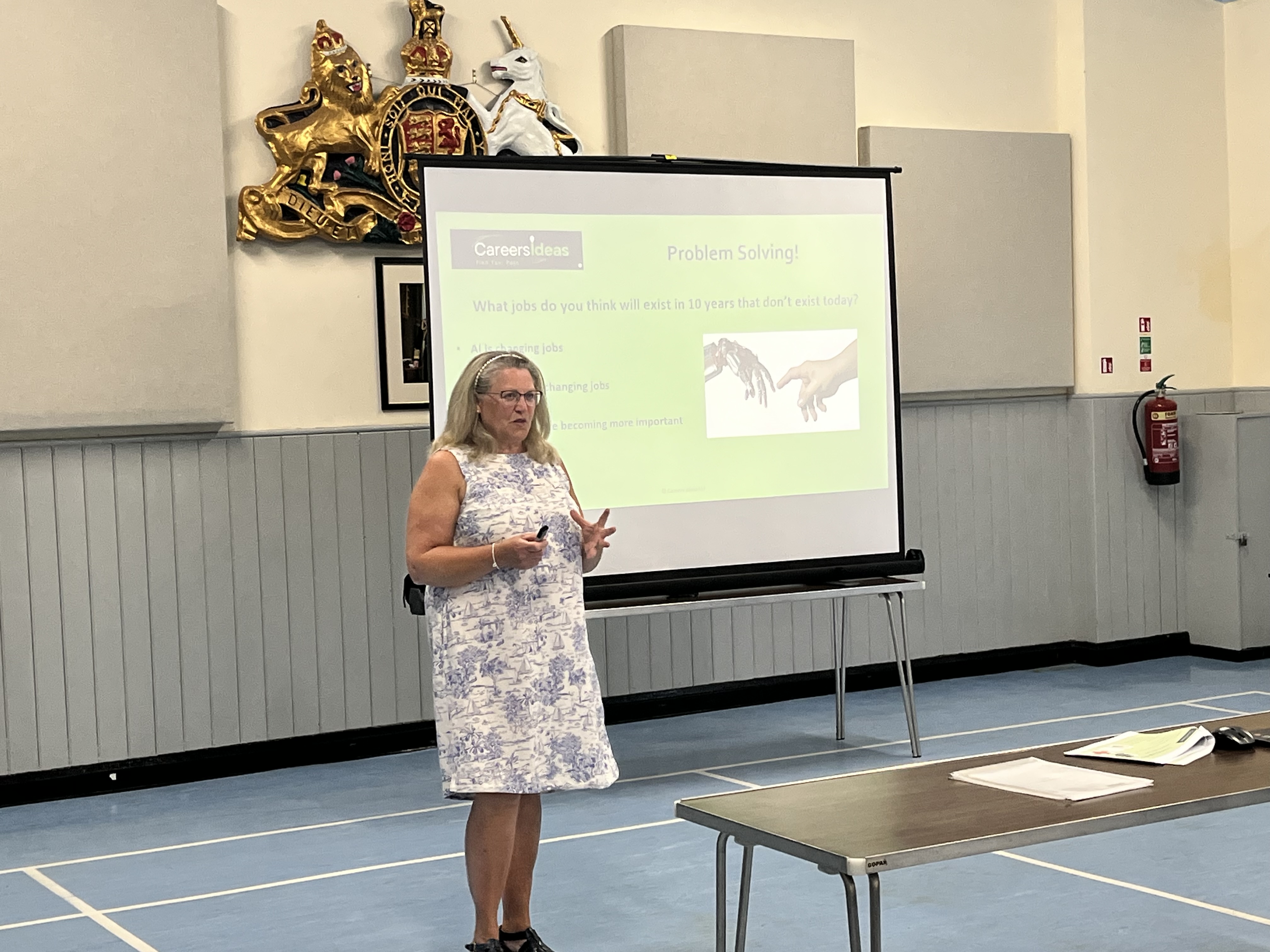
Career Insights with local Cadets!

Exploring Hidden SEND in service children
Silver ERS holders!


