Why identifying military connected students should be at the heart of an Inclusion strategy!
Seeing the unseen: Supporting Military connected Students at B&FC


I'm delighted to report that the Centre for Evidence for the Armed Forces community has chosen to feature a research article one of the projects I'm working closely with the College for Military Veterans on.
In their latest issue, they interviewed Rebecca Steel (Director College of Military Veterans and Emergency Services, University of Lancashire) and Anna Bell (Lecturer in Adult Nursing, University of Lancashire), about their new research study: “Education: A Pathway to Wellbeing”.
Focussing on the intersection of education and employment, ‘Education: A Pathway to Wellbeing” explores the needs of Armed Forces spouses and partners as potential students and employees. The research aims to use evidence-based practice to develop pathways which address the unique challenges spouses and partners of regular and reservist personnel face. This will lead to the development of interventions to raise confidence, aspirations, and improve wellbeing through opportunities to study and work.
Military spouses are the backbone of the military community, providing the social, emotional, and logistical infrastructure that underpins the stability of Service life. Their ability to sustain family functioning, maintain continuity during frequent relocations, and absorb the psychological and practical pressures associated with deployments forms an essential, though often invisible component of operational effectiveness. Approximately 55,000 regular Service personnel are married or in a civil partnership, over half of Service partners are with Army personnel and 26% of these report a non-UK nationality, with the majority of Service spouses living in England.
Being part of UK Armed Forces means sacrifices, the employment of a family member in the military impacts on everyone. Family members, find themselves juxtaposed between military and civilian life. Whilst they are not enlisted institutional constraints impact upon their daily lives. This can be through many factors, where they live and the accommodation they live in, who is present and absent in the family, how the social determinants impact upon their future and life ambitions. This stabilising role enables Serving personnel to carry out their duties with reduced domestic strain, directly contributing to organisational readiness, retention, and the overall resilience of the UK Armed Forces.
Transition of Serving personnel re-entering civilian society from military life remains an issue of concern, relatively little consideration is given to the role of military spouses. Therefore, this project supports partners to develop their own identity and skills, working collaboratively with colleges, universities, and employers across the North West to highlight unique challenges faced by this group and improving access to provision.
Despite this central contribution, the educational and career aspirations of military spouses remain insufficiently understood, under‑researched, and inadequately supported. Structural features of military life, such as mobility, the unpredictability of posting cycles, and limited access to childcare or local networks. These challenges create significant disruptions that impede sustained engagement with education and professional development. Often interconnected with broader gendered expectations around caregiving and household management, compounding inequalities and leaving many spouses underemployed, professionally isolated, or unable to realise their academic potential. I highlighted this all too familiar tale in my podcast Mission Employable UK® with Ella Cartwright from Recruit for Spouses (RFS).
This project aims to generate a robust evidence base on the lived experiences of military spouses, with a particular focus on factors influencing wellbeing, access to education and opportunities for personal and professional development.
A Project Advisory Group (PAG) has been convened to provide strategic guidance, ensure methodological rigour, and strengthen the relevance of the project to those it intends to serve. The group comprises members of the Armed Forces community, including military spouses, tri‑service representatives, academics, and social enterprise partners, who collectively bring a diverse range of perspectives and expertise.
The PAG will act as critical friends throughout the research process, offering constructive challenge, reflective commentary, and expert insight to ensure the project remains robust, relevant, and ethically sound. Members will support the refinement of research tools such as interview guides and questionnaires, ensuring these are culturally sensitive, inclusive, and appropriate for the Armed Forces community. They will advise on implementation of data collection, helping the team navigate contextual considerations that may influence participation or interpretation. The group will also assist in reviewing and interpreting emerging findings, drawing on their lived experience or professional expertise to ensure conclusions are grounded in real‑world contexts.
The findings will strengthen understanding of the educational and wellbeing challenges faced by military spouses and partners and inform the development of more effective policies and practices at national and UK levels. By highlighting how service‑related mobility and transition affect spouses/partners and their families, the research will support the creation of evidence‑based interventions rather than assumptions. The work will also contribute to international discussions on supporting Armed Forces families and identify priority areas for future research with military spouses and partners.
This important research project is possible due to securing funding from the Armed Forces Covenant Fund Trust. The research team consists of Rebecca Steel (Director College of Military Veterans and Emergence Services, University of Lancashire) and Anna Bell (Lecturer in Adult Nursing, University of Lancashire). Both Anna and Becky possess lived experience of the Armed Forces community and are experienced post-graduate researchers employing participatory methodologies to understand the barriers the Armed Forces community face.
I was delighted to be approached to act as the employer engagement and careers pathway lead. To read more about the work of the CEAFC click the link below:-
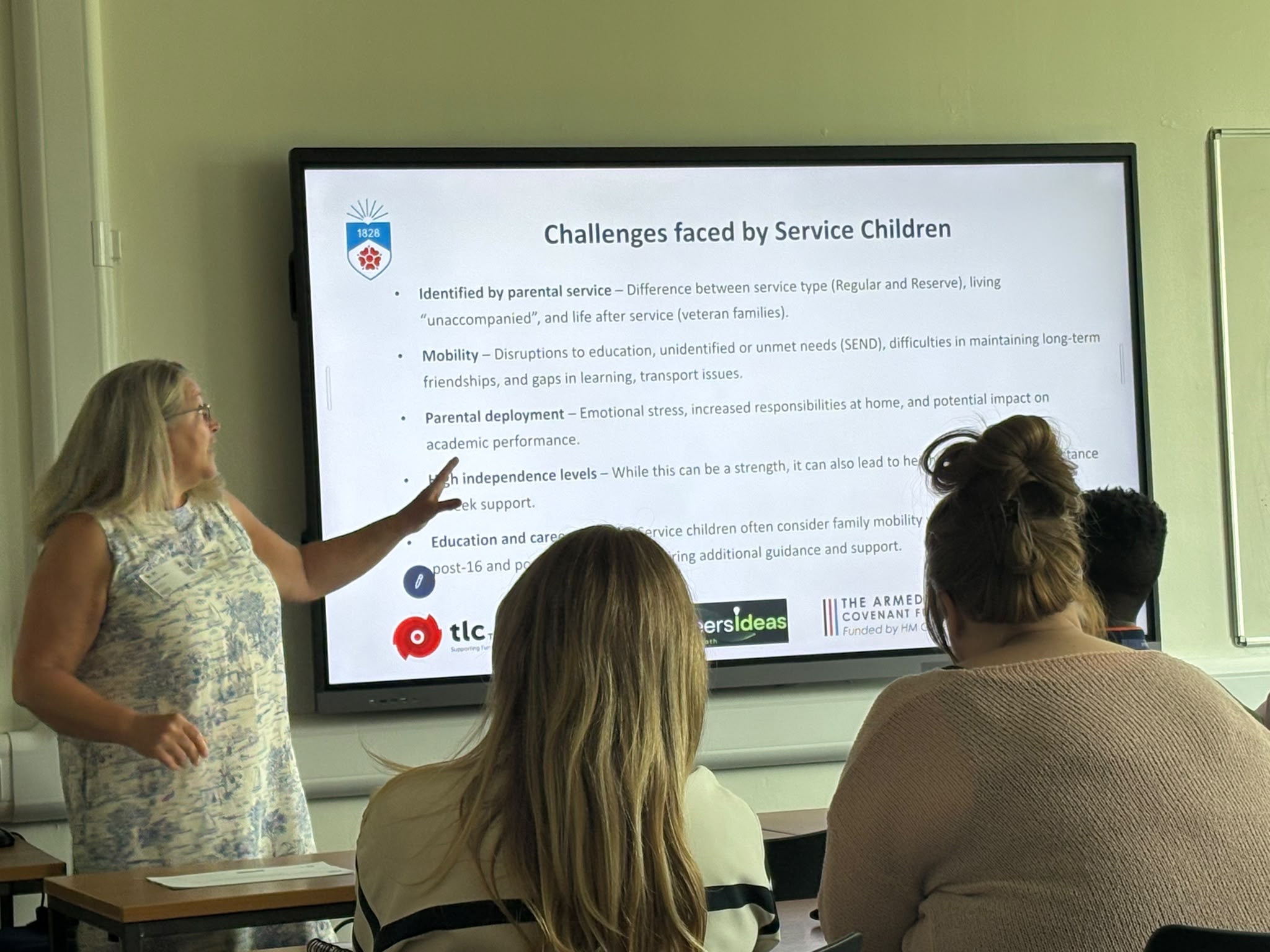
Seeing the unseen: Supporting Military connected Students at B&FC
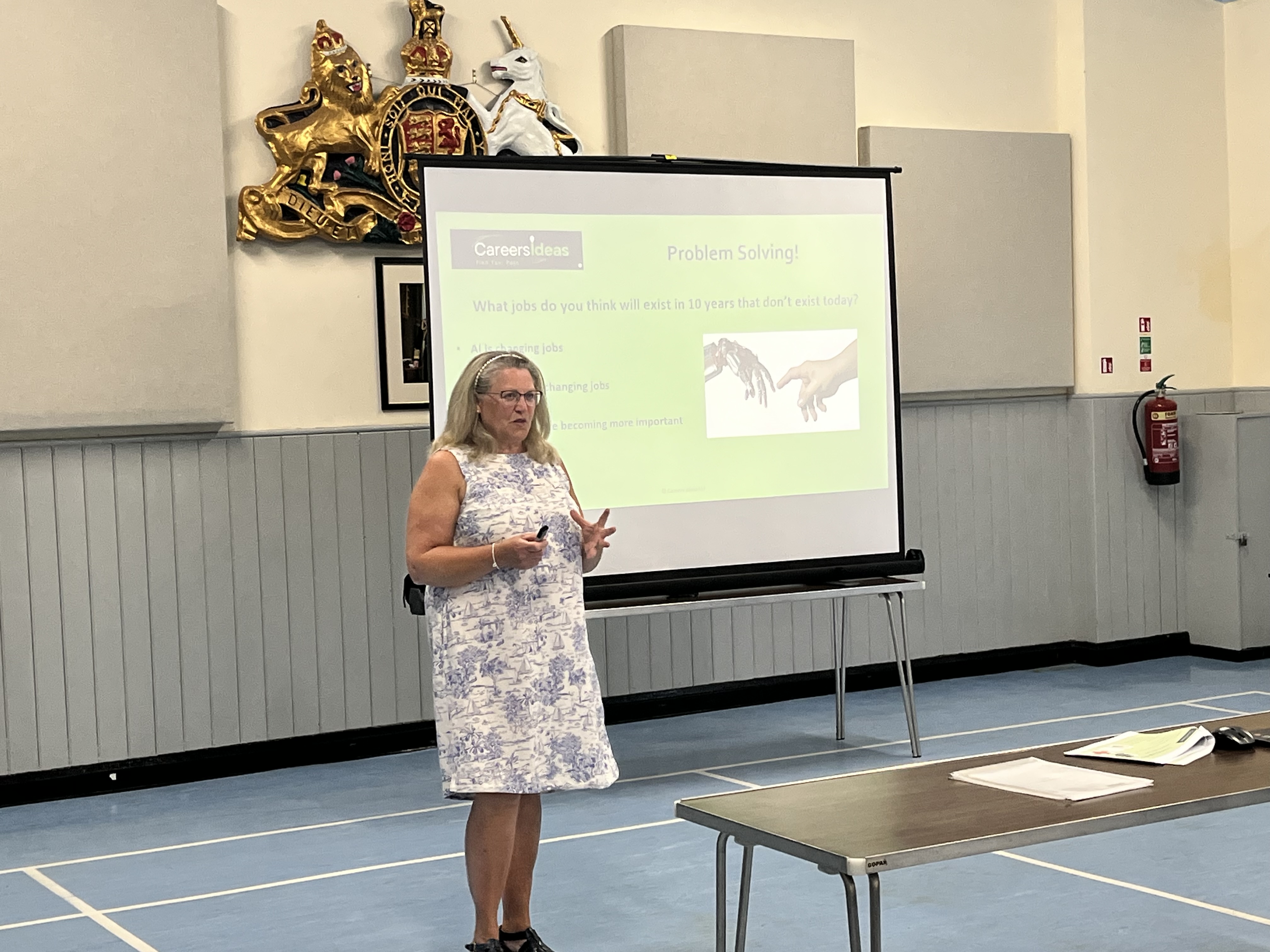
Career Insights with local Cadets!

Exploring Hidden SEND in service children


